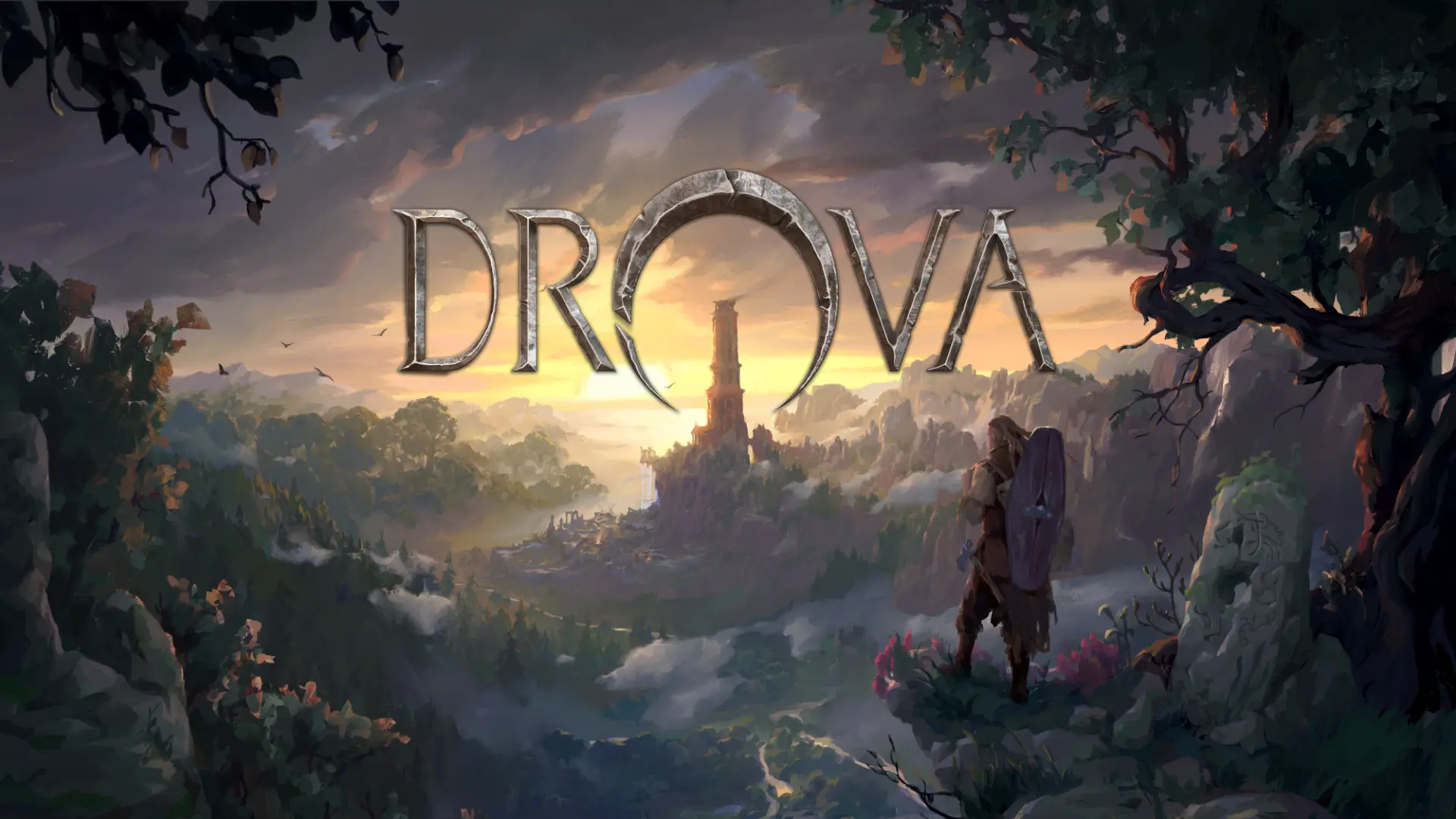

An RPG with a large, handcrafted world, a combat system comparable by players to Dark Souls, heavy inspirations from the Gothic series, all topped off with beautiful 2D pixel-art graphics. Sound familiar? Drova: Forsaken Kin is the result of several years of work by a team of enthusiasts from a small German studio called Just2D. Its creators make no secret of the fact that the Gothic series was their main inspiration during its development. While playing, you can see this in the faction system, which is characteristic of Piranha Bytes games.
Drova was released in October 2024 and has since received a massive amount of positive reviews. At the time of writing this article, its rating on Steam is 90%. However, the developers themselves are not resting on their laurels and, in addition to ongoing updates to the title, they are already working on their next game with the working title Topas. The release of the Polish version of Drova: Forsaken Kin, announced by Just2D last year, is fast approaching. On this occasion, we decided to talk to Christian Sandkämper (Chris), the studio lead, about Drova and the mysterious new project Topas. Of course, we couldn’t leave out a few questions about the Gothic Remake.
Where does the name “Just2D” come from? Was it clear from the start that you only wanted to develop 2D games? Does this mean we will never see a 3D game from you?
Actually, we didn’t think that far ahead about whether it would be 2D or 3D. We won an award for a small game that Kai and Chris developed. When it was described, it was said that the game was addictive and fun, even though it was “just 2D”. That annoyed us a bit. Why should a game be less fun just because it’s in 2D? And that’s how we got our name.
Drova: Forsaken Kin has received fantastic reviews on Steam (over 90% positive). Did you expect such a warm reception?
Absolutely not! We – and by that I mean us as developers and our publisher, Deck13 – had no way of predicting this. Back then, we just wanted to develop a game that would evoke the same emotions in us as the very first RPG we played as kids. We didn’t like the trend of modern RPGs, so we thought, why not make one ourselves? In the end, it took a lot more work than we expected, and we didn’t think there were so many people in the world who thought the same way we did. We were probably very lucky that our first RPG happened to be Gothic.
Is there any hidden mechanic or secret in the game that you are particularly proud of, but which most players may have missed?
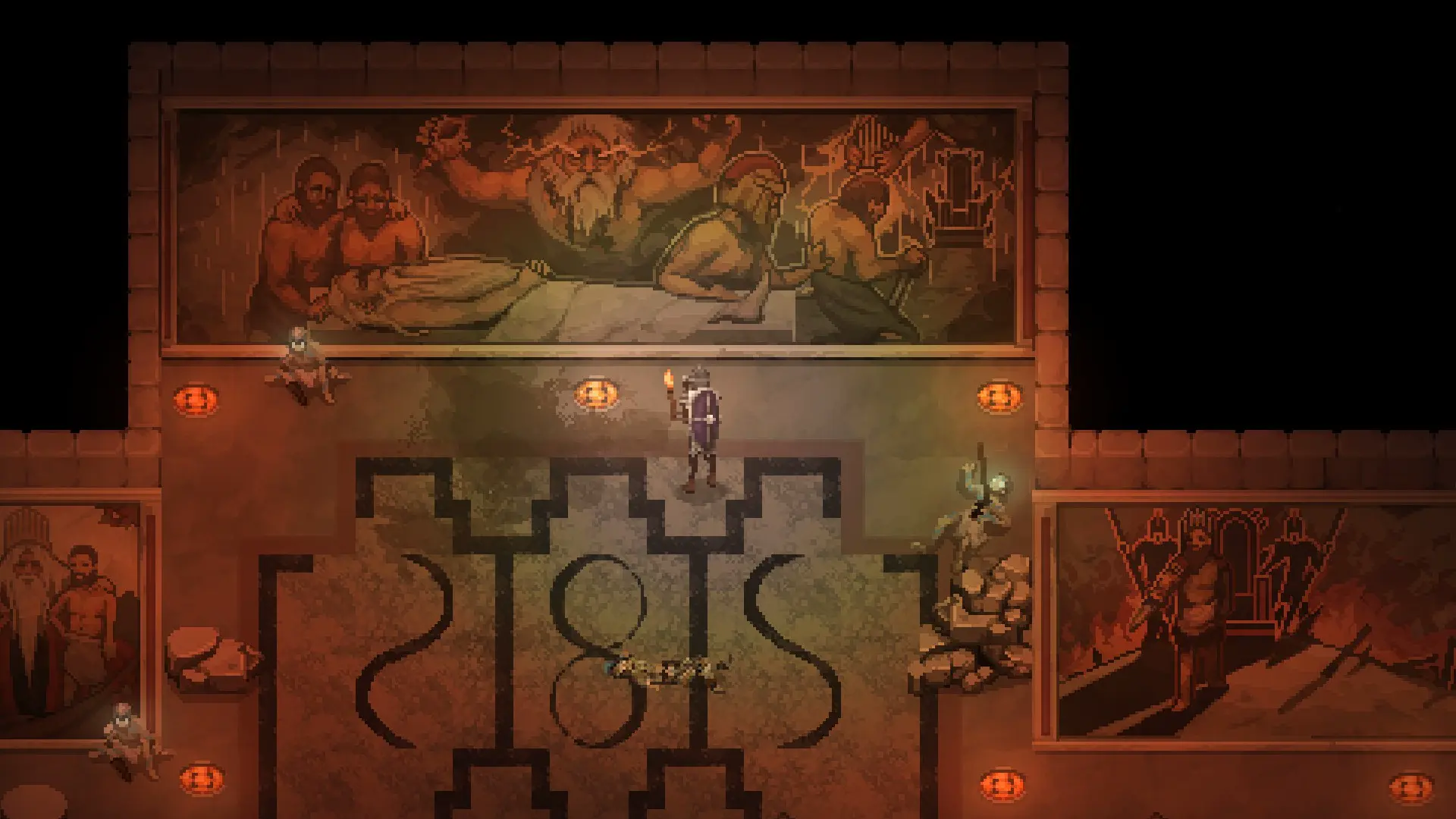
We put a lot of little things like that in the game. One very cute moment is when you click on certain plants, and they start to glow. In one place in the game, there are lots of piglets next to them that react to it in an adorable way. Probably not many people have actually tried it.
What was the biggest challenge for you during the development of Drova?
The biggest challenge for us was definitely porting it to the Switch. Getting an open-world RPG to run on the Switch is an absolute nightmare! We are currently developing a mobile version of Drova, and it’s significantly easier. We didn’t expect that at all. Compared to the Switch, which has 4 GB of RAM built in, of which only about 2.5 GB can be used effectively, mobile phones nowadays easily have 16 GB of RAM or more. It was a real shock for us, and getting it done without having to resort to loading screens in the end cost us a lot of effort and tears.
Was the decision against full voice acting purely budget-driven?
At the time, we didn’t even consider full dubbing because it was simply completely unrealistic for us financially. In the beginning, we didn’t even get a salary. Later, when things got more “serious”, the topic was quickly off the table anyway because it simply wasn’t financially feasible for us. But there is currently a German voiceover being developed by the community, and we are very excited to see how it feels in the game.
Was there that one “nightmare bug” during production that was extremely hard to reproduce and fix, and which almost halted production? What was the cause?
We think we were very lucky that all four founders of Just2D studied computer science. We had bugs, but all of them were more or less quick to fix. Technically, we are quite well prepared. So there was no case that was very difficult to reproduce, or that made us feel like giving up. Sure, the open world on Switch was… exciting. But we managed to get that done quite well in the end, too.
During the development of Drova, were you thinking more about fans of classic RPGs, or did you want to show the younger generation how “different” an RPG can look? (no hand-holding, no markers on the map, etc.)
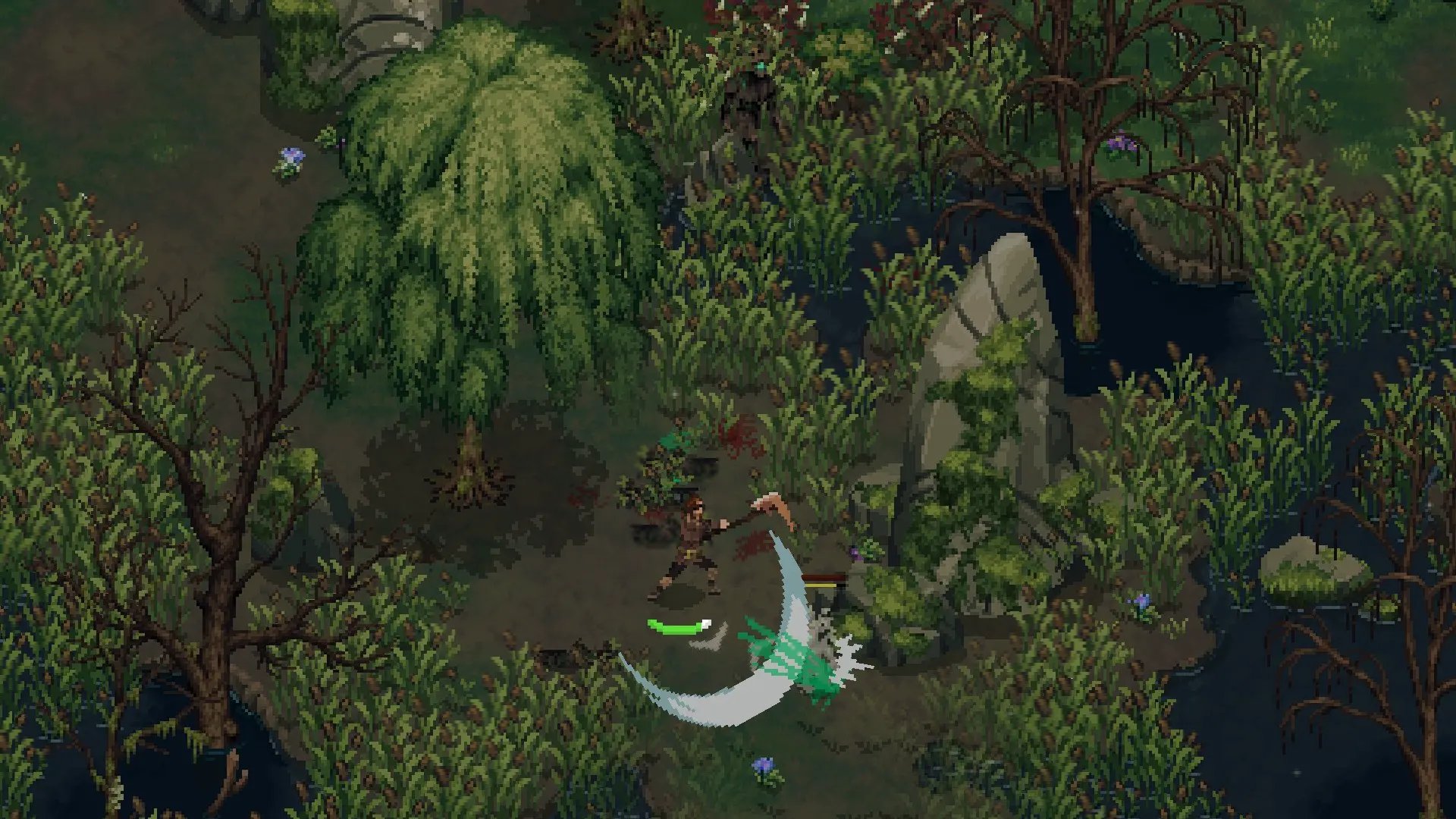
When we started development, we simply wanted to make an RPG that we missed playing. An RPG that doesn’t hold your hand, where you aren’t a big hero, where you are weak at the beginning, and then gradually become stronger. Without quest markers, you’re supposed to discover the world yourself. We wanted to be taken “seriously” as players by the game again. We really like to compare our title to classic RPGs, but we think it’s actually more of a branch-off. It’s classic, but with modern elements.
We believe, in the end, we developed the game for people who think the same way. Those are probably mostly fans of classic RPGs, but we believe that young people can also have a lot of fun with it.
Was there an element (mechanical or narrative) inspired by Gothic that you initially considered but then discarded because it might not work in today’s gaming landscape?
We didn’t look at it strategically in terms of “what will be well received” or “what people might like”. We just made what we like. We added quests that made us laugh and fights that made us sweat. We assumed that if we liked it, there would be people who would appreciate it too. It was only while working on Drova that we played Gothic again for the first time in a very long time; before that, Gothic only existed in our memories. Drova is inspired by childhood memories of playing Gothic, not the actual Gothic game itself. But we only realised that when we finally replayed it.
After the time that has passed since the release and player feedback, do you see any elements that you think didn’t work out? Would you design it differently today?
This was our first commercial game. We are really proud of what we have achieved. There are always a lot of things that you are not completely satisfied with. That’s the nature of creation. But the feedback on Drova from all the players is quite clear. However, we did make some minor tweaks here and there via the Content Updates in a few places where player feedback differed from our intentions. A certain scene in a certain forest comes to mind here. We didn’t change the scene itself, and we stand by our decision, but we gave players the option to loudly question the events in the game world.
What will Topas be like? Should we expect a “Drova 2”?
We already hinted in our updates that we don’t exactly know where Topas is heading. We consciously don’t want to call it Drova 2 right now. It could become Drova 2. But it could also be called something entirely different. We are… hm… well… let’s call it “open to the outcome” at the moment. It will build on the strengths of Drova, that’s for sure. So, an open-world RPG with two factions, and you’ll meet lots of NPCs. All that good stuff.
You announced that Drova is coming to mobile devices. How is that process going? Were there difficulties that forced you to change game mechanics?
That was quite an exciting challenge. Initially, it was just a wild idea, a kind of challenge for ourselves. The Nintendo Switch was already quite a task due to its limited RAM. But we thought: hmm, could we also launch Drova on phones? It turned out that yes, we could. Then we developed adapted controls. We had to tweak the aiming. And then it played great. But we had to adjust the inventory. And the teachers. And everything else. And well, suddenly we had a pretty cool version running for mobile.
In one of the devlogs1, Chris and Fabio mentioned that Drova was classified as a “Soulslike” by Steam players, which does make sense. Will you follow this path in your new title (Topas)? Or will it be more “Gothic-like”?
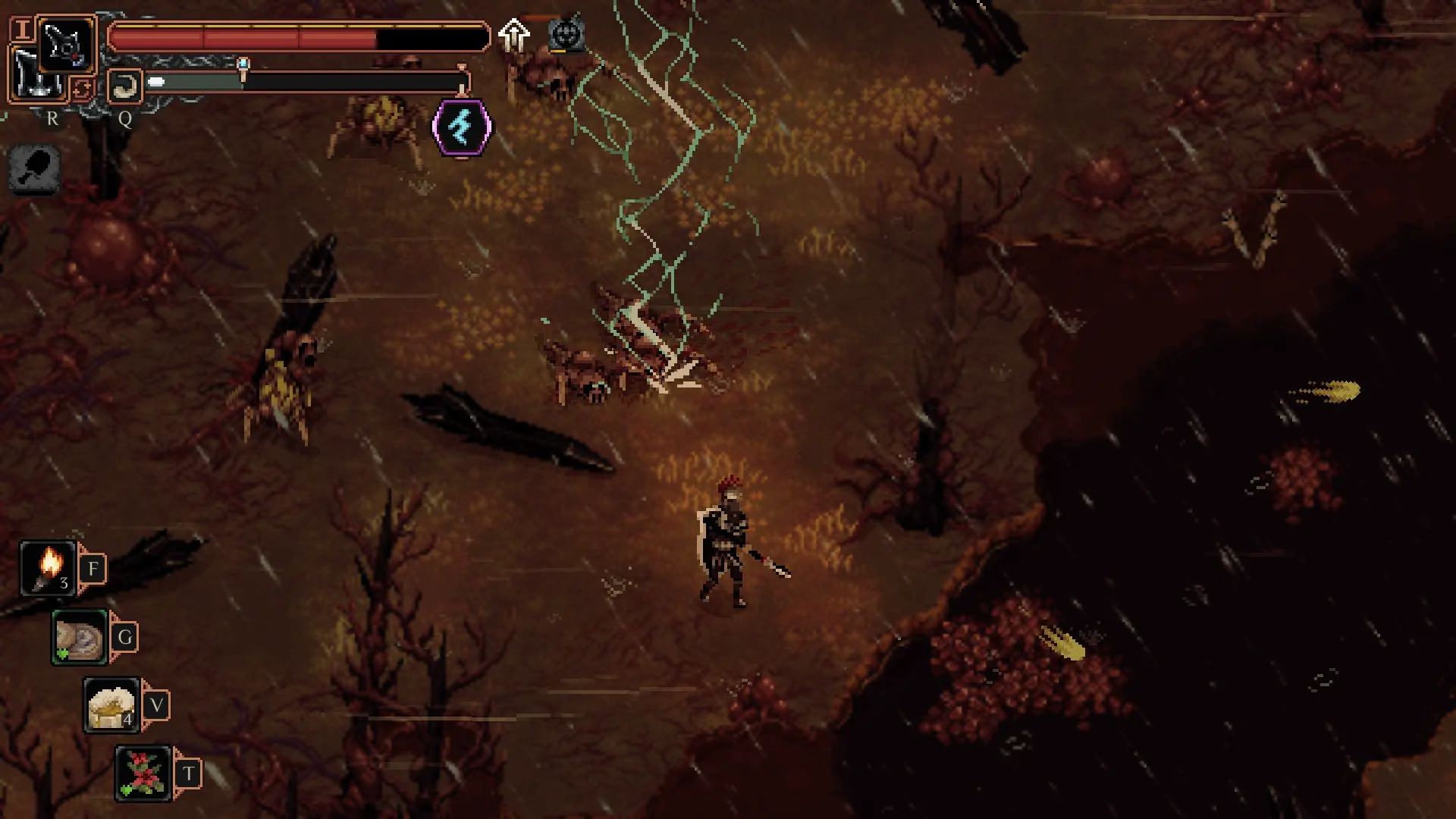
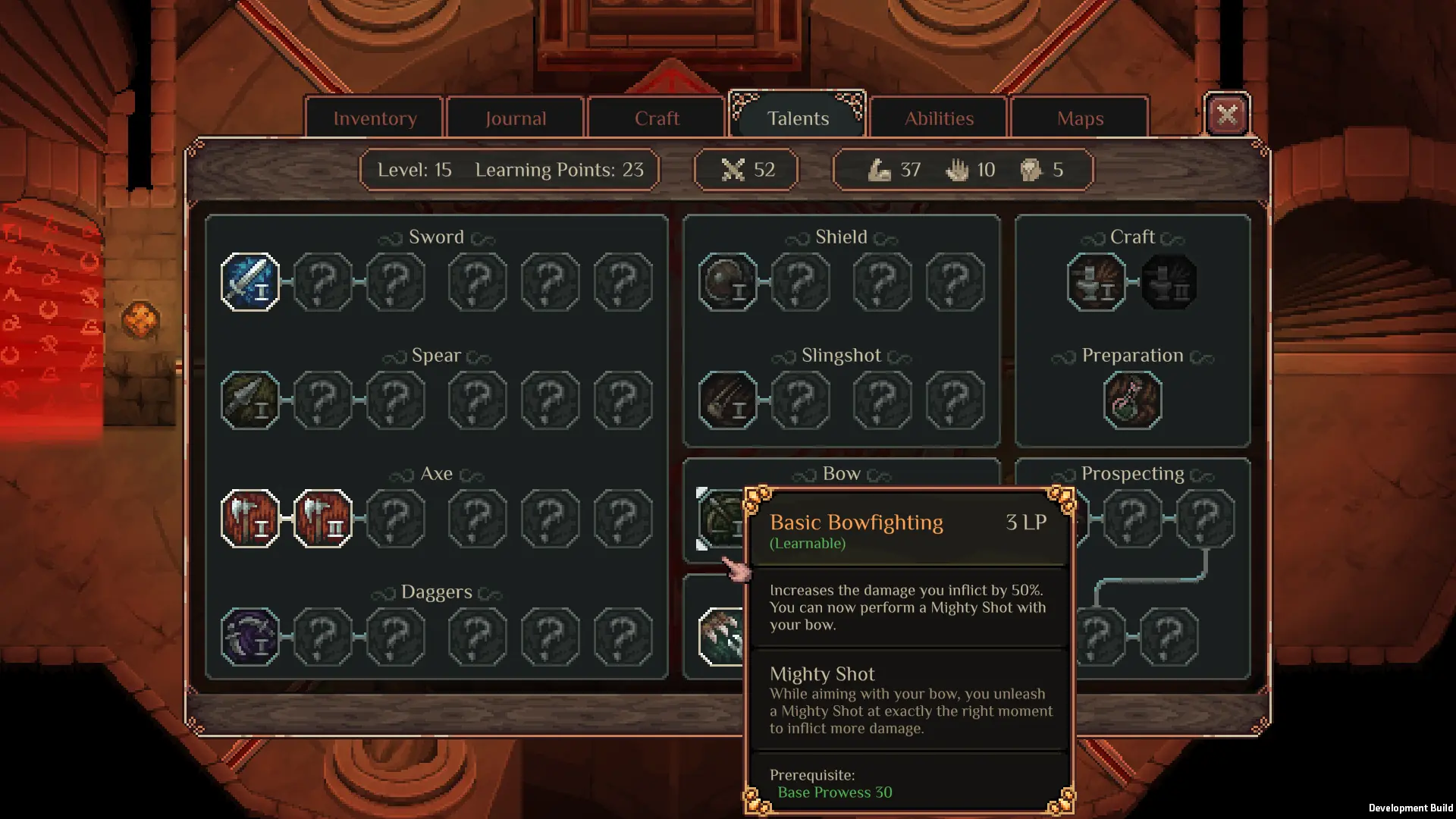
We personally don’t think Drova is a Soulslike game, but where do you draw the line? Our next project will definitely go in the same direction as Drova. Open world, NPCs, choices, factions – and you start with empty pockets, having to climb the hierarchy. Of course, we know why some players use the term Soulslike, but Drova is not one at its core. We place too much emphasis on character stats. Sure, the combat system also requires player skill. But character parameters are definitely more important here than in a Soulslike.
Let’s stick with the term “Gothic-like”. Drova isn’t the only game to appear in this space. The creators of Sword Hero recently released a demo of their upcoming production. In addition, developers from Pithead Studio (former employees of Piranha Bytes) are working on their title, Cralon. Are we currently witnessing the birth of a new RPG subgenre? The “Gothic-like”?
Absolutely! We hope so! It’s time to point out a new – or old – direction for RPG games!
Why do you think the Gothic series became particularly cult in our part of the world, or even in Europe?
As a German game, Gothic had the home-field advantage and very good German texts and dubbing. Its gameplay certainly hit the right note, but the lack of strong competition in terms of localization at the time also played a significant role. In Eastern Europe, on the other hand, the game received translations that other titles from that period simply did not offer, which was something new in the RPG genre. So if you didn’t speak English, there were no real alternatives. In English-speaking areas, however, such alternatives did exist – and there, well, let’s put it this way: their dubbing and localization of Gothic could have deserved a little more attention. Nevertheless, Gothic also gained popularity there, as can now be seen in the example of Gothic Remake. You don’t make it into the top 25 Wishlists on Steam without the American market.
A lesson from Gothic that no one understands. What do you think is the most important, but most often misinterpreted or ignored design lesson from Gothic that you tried to implement in Drova?
We find it a pity that Gothic is often reduced to just the rough atmosphere of the dialogues from the Ruhr region. What inspired us most about Gothic was that the people are all very helpful in their own way. And at the same time, they would betray you at any moment if the opportunity arose. That rough tone is not an essential part of the Gothic formula. It is often associated with it, but that tone simply stems from the overall harshness of the world. Sure, it’s part of it in a sense, but what’s really fascinating is the depiction of this harsh environment itself. And what consequences it has, and what drives the characters to help someone or to betray them. Sometimes it’s selfishness, and sometimes it’s external influences.
Are you following the development of the Gothic Remake? How do you think (from a developer’s perspective) a Gothic should look in the year 2026?
Of course, we’re following the development. We really hope that the game will live up to expectations. That would make us very happy. We simply love this style of RPG, and in the best-case scenario, it will lead to more classic RPGs being created. We’ll see in June. However, if we were to talk about a completely new Gothic… phew, that’s a tough one. A more modern combat system would certainly not hurt. In any case, the world shouldn’t get too big. Gothic thrives on its compact world, which is coherent in itself and slowly opens up to the player. Of course, it also owes its success to its harsh atmosphere. But also to characters with their own goals and motivations. We believe a lot more can be squeezed out of the daily routines and from the factions themselves, for example, by offering optional content that is easy to miss, allowing players to experience a completely different story within the same compact world.
The Polish community is waiting impatiently for the Polish version of your game. Is the release date for the Polish localization already known?
The Polish version will be released on April 23 this year. As for the Topas project, we plan to release the Polish version on the day of the premiere. That’s the plan! And that’s how it’s scheduled. But please don’t nail us down on that. It’s planned, but things can happen. It’s unlikely, but you never know.